Alexandria occupies a unique psychological and geographic space in Egypt. While Cairo is defined by the dense, landlocked intensity of the Nile Valley, Alexandria—founded by Alexander the Great in 331 BCE—looks outward toward the Mediterranean. It is a city built on syncretism, where Greek philosophy, Roman engineering, and Egyptian mysticism once merged to form the intellectual capital of the ancient world.
The Intellectual Resurrection: From Scrolls to Silicon
The original Great Library of Alexandria was the ancient world’s premier “universal” archive, aiming to house the sum of human knowledge. While the original was destroyed by successive fires and conflict, the Bibliotheca Alexandrina (opened in 2002) is a deliberate architectural reincarnation.
- The Architecture: The building is a vast tilting disc, representing the sun rising over the Mediterranean. Its exterior is composed of 6,400 granite panels etched with characters from 120 different human scripts.
- The Depth: Beyond a reading room that can accommodate 2,000 people, the complex houses four specialized museums—including a sophisticated Antiquities Museum that displays artifacts salvaged from the Mediterranean floor—and a state-of-the-art Planetarium.
The Archaeology of the Submerged and Subterranean
Alexandria’s most significant history is often found below ground or under the waves. Because the modern city sits directly atop the ancient one, vertical exploration is key to understanding its past.
- Catacombs of Kom El Shoqafa: This 2nd-century AD burial site is a masterclass in cultural blending. Descending a spiral staircase, visitors find a banquet hall (the Triclinium) where relatives once dined to honor the dead. The iconography is uniquely “Alexandrian”—Roman soldiers depicted with Egyptian jackal heads, and Greek Gorgons guarding Egyptian tombs.
- The Citadel of Qaitbay: Built in the 1470s by Sultan Al-Ashraf Qaitbay, this fortress is a recycled monument. It was constructed using the fallen masonry of the Pharos Lighthouse, one of the Seven Wonders of the Ancient World. Standing on its ramparts provides a strategic view of the Eastern Harbor, where underwater archaeologists continue to map the submerged ruins of Cleopatra’s palace.
The Corniche: A Study in Urban Rhythm
The Corniche is a 15-kilometer waterfront promenade that serves as the city’s social lungs. It reflects the 19th-century “Belle Époque” era when Alexandria was a cosmopolitan hub for Greeks, Italians, and Levantines.
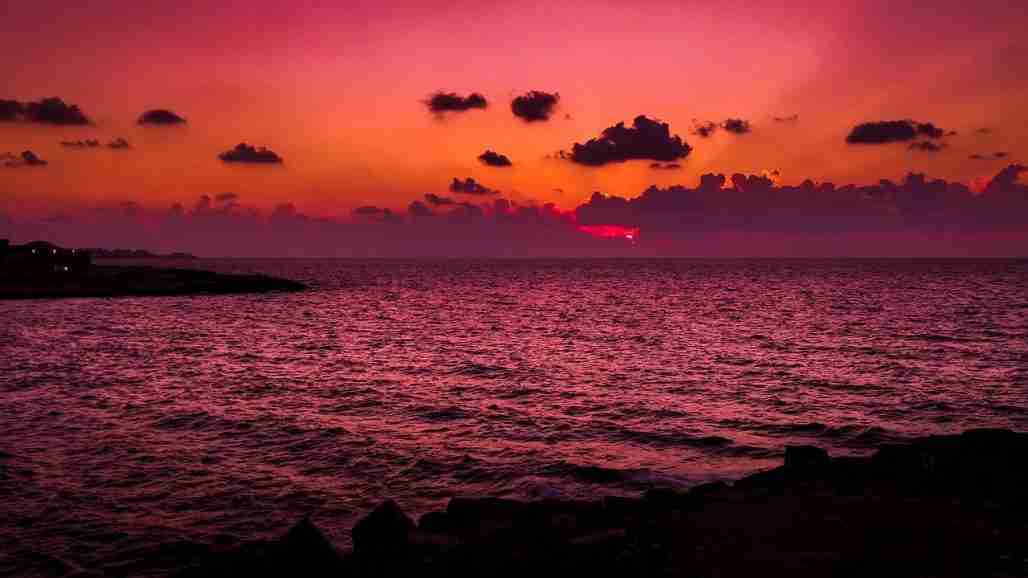
- Stanley Bridge: Notable for its four towers designed in the Neo-Islamic style, it offers a vantage point for the “Golden Hour,” when the Mediterranean fades from turquoise to deep indigo.
- The Café Culture: To sit at a café like Trianon (once a favorite of the poet C.P. Cavafy) is to see the remnants of a European-influenced past: high ceilings, ornate moldings, and a slower pace of life that contrasts sharply with the frantic energy of Cairo.
Culinary Identity: The Bahary Influence
In Alexandria, the culinary focus shifts entirely to the sea. The Bahary district (the old fishermen’s quarter) is the epicenter of this tradition.
- The Technique: Look for “Singary” style fish—typically sea bass or red mullet—butterflied and grilled with a potent mix of garlic, bell peppers, and cumin.
- The Staple: Alexandrian cuisine is distinct for its Sayadeya rice—onions are caramelized until nearly black, giving the rice a deep, savory mahogany hue that perfectly complements the salinity of the fresh catch.
Modern Legacy: The Melancholy of Literature
The city’s atmosphere is famously “liminal”—stuck between its glorious antiquity and its gritty modern reality. This has made it a muse for international literature. From the Greek sensibilities of C.P. Cavafy to the lush, complex prose of Lawrence Durrell’s The Alexandria Quartet, the city is often portrayed as a place of ghosts and memories. Today, this is felt in the fading facades of the Downtown district, where vintage cinemas and bookstores remain as monuments to a century of intellectual exchange.
Image by karim Fathi from Pixabay