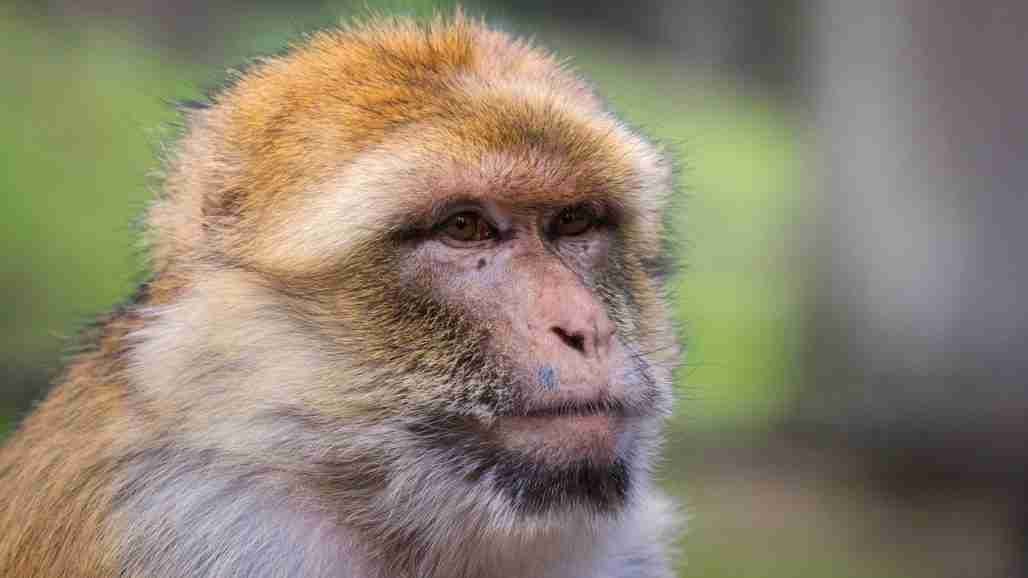
Perched on the cedar and oak forests of North Africa, the Barbary macaque is the most intriguing and charming of the continent’s primates. With their stern faces, playful behaviour, and tight-knit family groups, these monkeys have captivated residents and tourists for millennia. But aside from their mischievous personality, the Barbary macaque plays a significant role in the ecosystems of the Atlas Mountains’ and beyond—and their story is more complex than it seems on the surface.
The Barbary macaque: Not Your Average Monkey
The Barbary macaque (Macaca sylvanus) is the only macaque species to be found outside of Asia—and the only native monkey of North Africa. They don’t have tails like most of their distant primate cousins, which seems to make them all confusing with apes. But don’t be deceived—they’re monkeys, and quite clever ones at that.
They live mainly in Morocco’s mountains and Algeria, with the biggest wild population in Morocco’s Middle Atlas region, especially in places like Ifrane and Azrou. They have a tiny, introduced population that is famously resident on Gibraltar’s Rock, which makes them the only wild monkeys in Europe.
Barbary macaques are well adapted to their mountainous habitats, where the temperature can drop below zero in winter and rage in summer. They have thick, sandy-coloured fur that helps to keep them warm, and their social behaviour like huddling together in large groups helps in bonding as well as survival.
A Day in the Life
Barbary macaques live in troops of 10 to 100 and are not alpha-male led but rather a matriarchal society. Females play the dominant role in their community, and their family is tight-knit. And men, to everyone’s surprise, have a role of their own to play—they help in taking care of the children, remaining close to infants despite not being the biological father.
This behaviour is rare among monkeys and makes them particularly interesting to primatologists. You’ll often see males carrying babies under their arms, grooming them, and even “showing them off” to other macaques as a way of forming alliances.
Barbary macaques spend their time digging around on the ground to find roots, fruits, seeds, leaves, insects, and even small lizards. They are graceful in the trees but spend a great deal of time on the ground too. Their curiosity knows no bounds—and sometimes gets them into trouble, especially when they interact with humans.
The Gibraltar Macaques
You can’t mention Barbary macaques without mentioning the Gibraltar colony, a group of around 300 monkeys who have become one of the most famous (and mischievous) residents of the British Overseas Territory.
No one is quite sure how the macaques first arrived on the Rock, but they’ve been there for centuries. One theory suggests they were introduced by the Moors during their occupation of the Iberian Peninsula; another suggests the British brought them over in the 18th century.
Either way, they’ve settled right in. So much so that they’re regularly seen stealing snacks, sunglasses, or even handbags from unsuspecting tourists. Despite their troublemaking, however, they are a protected species, and British military lore has it that while the monkeys remain on the Rock, Gibraltar shall remain in British hands.
Trouble in Paradise
Though they are well-liked in cultures and playful, Barbary macaques face serious threats to their survival in the wild. Habitat loss due to deforestation, illegal pet trade, and human conflict are posing threats to their populations.
Their forests in Morocco and Algeria are being cleared by logging, animal over-grazing, and encroachment by people. As a result, food is less abundant, and the population becomes fragmented. In some areas, young macaques are hunted and traded as exotic pets, often kept under bad conditions far from their natural habitats.
Currently, the Barbary macaque is classified as Endangered on the IUCN Red List. It’s estimated that fewer than 10,000 remain in the wild—a sorry number for a species that once thrived throughout North Africa and even into Europe during the Ice Age.
Conservation Efforts
Luckily, word is getting out. Local and international conservation groups are taking action to protect remaining habitat, educate local people, and stop the illegal wildlife trade in many African Animals including the macaques .
In Morocco, macaques are being collaborated with by forest rangers and local communities to monitor their populations and develop sustainable tourism. Macaques are visited by travellers in their natural environment—especially in places like Cèdre Gouraud Forest in the Azrou region—where guides will allow you to have a responsible, respectful encounter.
Programs also emphasize teaching tourists not to feed the monkeys, a common but harmful habit that alters their natural behaviour and renders them human food-dependent.
Gibraltar, however, has its own set of rules. The macaques are kept under close observation by rangers, and people are fined for feeding them. The government even has education campaigns to allow tourists and locals to live with the monkeys safely.
Why They Matter
Barbary macaques are not just fascinating creatures—they’re also forest health indicators. They are seed dispersers and insect eaters, maintaining balance in their ecosystems. When they decline, it’s a sign that the forests they live in are under pressure too.
They also inform us about the social ways of primates—and by extension, ourselves. Their relationships, their care of young, and their communication reveal some of the same types of behaviour we ourselves exhibit as our own species.
In the misty forests of the Atlas Mountains or the rocky cliffs of Gibraltar, the Barbary macaque still charms with its cunning eyes and cheeky nature. Rescuing them is rescuing a valuable slice of Africa’s natural and cultural heritage—and ensuring that future generations can gaze up into the trees and see a little monkey looking back at them with wonder and charisma.
Image from https://pixabay.com/